Monday, June 20, 2016

Review of the single Peggy by Orchards

Cover photo for the Orchards Bandcamp


With the release of their new single Peggy, the Brighton band Orchards has received much more attention than they have in the past. Since their previous EP, Constantly Moving, which was released in early 2015, they've swapped out their vocalist for someone who sings with an intergalactic shimmer, Lucy Evers.

The new single Peggy is written about idealizing a slipping relationship, where the writer is urging the other party to be more realistic and grounded in the situation. But to no avail, the poor circumstance continues to be prolonged. This exhortation is also displayed in the complex structure of the song, yet having a stripped down lineup consisting of one lead vocalist, one guitarist, a bassist, and a drummer/percussionist.


"I don't know where you've been but I can see the tension 
Are we gonna crumble through the cracks that we share?" 


The song begins with a soft chant and all the instruments quickly jump in, it seems to be a perfect way to introduce a new lineup and a fresher sound that only slightly strays from their last release.

While still classified as math rock, Peggy has a flow that won't jolt a casual listener; the balance between technicality and groove doesn't clash (especially that breakdown bit halfway through the second verse, it adds so much body to the song by opening it up). As mentioned earlier, the lineup seems thin for such a full sound that Orchards has. The melodies glide over top of the flowing, tappy guitar licks and the bass and drums stay synched to showcase Evers vocals, but still have ample opportunity to display their prime musicianship.


"Make it worth it, can you stay for the night? 

All I want is to be perfectly fine"

While the relationship in question continues on, the song also has so many opportunities to end but presses forward. If the song ended prior to the instrumental bridge, it would be a satisfactory song, yet nothing to rave about. Adding the "Middle 8" [bars], as denoted on Bandcamp, the song is driven in a new direction, giving us a part that we haven't yet heard. After the Middle 8, we're presented with another chorus, adding some vocal harmonies that make for a momentous feeling.

"I can feel it the air that you breathe 
The silence it haunts me 
Can't you see that I don't want you to leave"

But wait! It's still not over. The band squeezes in yet another half bar of syncopation that gives the listener their last taste of what's to come. My current relationship with with Orchards is hanging on by just a thread and and the silence since Peggy is haunting. I cannot wait for another release. Watch the accompanying music video here.
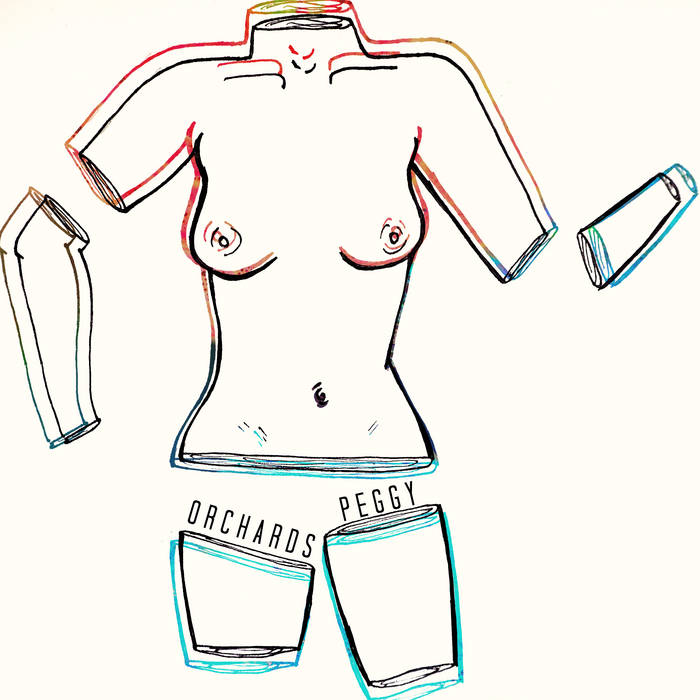

Album art for Peggy from Bandcamp

Friday, August 14, 2015

INTERVIEW w/ David C. R. Pollock

Though it may have been a lot longer than expected, I finally got around to compiling this email interview I have with David of DCR Pollock. Check out what he has to say about his inspirations and future plans! Visit his website for more information.


With the release of the new DCR Pollock album, what did you look towards for inspiration?

Oh, man. An awful lot of things. This question came up so often that I actually made a list of them available on my website. It is at the bottom of any page under work-cited. But here are some of the few that stand out:

Musically:
Hiatus Kaiyote 
D’Angelo
James Blake
Sufjan Stevens
The Candle at Jon’s Studio. I think it was Cedar scented
Lyrically:
Conor Oberst
Broods
Keaton Henson
Noah and the Whale
And a number of historians, philosophers and theologians


I see you have released tracks before, including a full length Letters to Forgotten Friends, why aren't those songs available now that the new album is out?
To be honest, I released Letters not expecting anything from it; it was more of an outlet than anything. So when I began to get serious with the solo stuff and began promoting myself I wanted most peoples first experience with my music to be more refined and thought through. I may re-release the older stuff as a Rarities Collection, but we’ll see. You can still find it on Soundcloud, I think. 


You collaborated with a lot of other artists to make this record. Can you explain how they contributed? (writing, recording, mad chills, etc.)
Yeah, there were a number artist that helped with the process. Jon Joseph, my brother, is probably worth mentioning first. He encouraged me to do the full length, produced it, provided a living space while I was in LA, provided musicians, played bass on everything, bought me lunch probably 5,000 times, etc. I wouldn't be having this interview without the guy. Not to mention he's the best hang I know. Most days it was just Jon and I in the studio, but a number of times we had people in the studio with us. Jon didn’t like the place crowded, so we kept it minimal to who would join us. The more frequent guest were my dear friends Jordan Ruiz, Kevin LeBar, and Savannah moon. With out the three of these people I don’t know if the record would much. They contributed everything from guitar, piano, vocals, cello, etc. to THE "maddest of chills”. Not only were they incredible players, but also the best of friends. We also had some guests such as Dan Bailey. He came about twice during the process of the record for drums, but he was an incredible support through the entire production. He would contact me frequently to see how the record was coming along and to just talk life sometimes. A number of the conversations contributed to quite a few lines on the record. I brought up a good friend of mine, Christopher Caron, for a day to co-write and play piano on St. Joseph. To be honest I don’t give the guy enough credit. Put aside the fact the he took my ex to prom back in high school, he has been absolutely incredible in helping me through a lot of the stuff in and outside of the writing process. But I think the most notable guest we had in the studio was Michael Gungor. I wasn’t actually even in the studio when he tracked, so I can’t say much about the guy except that he’s a real pal for tracking on some no-names record. 


Are you planning any shows in the near future?
Yes. There are four or five shows in the process. I took July off to work with the new band and focus on the publicity side of things and it has been rewarding. Stoked to introduce people to the new trio set up Im working with. Less people, fuller sound. Be expecting some rad things comin’ soon.


It's rumored you change lyrics when performing. What happens that makes you decide it necessary to change them? How do the new lyrics differ from what is recorded?
Yes. Part of being an artist is hating your own work. I cringe at some of the lyrics I wrote. We recorded as I wrote, so I didn’t sit on the songs a whole lot. Some song even I wrote in the studio. Probably the longest I got to sit on a song was a month, but that was rare. I mainly wanted to tell a story, so on a number of songs I sacrificed content for clarity. I don’t regret doing so, but it doesn’t mean I enjoyed it. I see live performances as an opportunity to change the record now that I’ve sat on the songs. I often change lyrics to Love in a Zoo, Sad Francisco (The title alone is cringe worthy), and Los Angeles. I don’t usually change the meaning of a song when I change lyrics. I’ll just reword things to make them sound more fluid or bring more depth to the work.


Are you working on material for another album release?
Always. It just a good habit to always be writing, even if its just a line or two a day. The only thing preventing me from taking it to the studio is the lyrical content. The issues I wrote about in the first record are still fresh, so I still find myself still writing about them. If I released what I’m writing now it would just be a B-side to the debut. People would just be like, “We get it, Dave. San Fran sucked. Get over it.”


What other projects are you currently working on?

Yes.


Was your goal to release the album before adulthood? How does it feel being an 'adult?’
No. I just did it when I had the opportunity. It just happened to be before 18. And in regards to “Adulthood”: The only thing that i’ve come to feel about being an “adult” is that now when ever I feel like a loser I can’t pull the “It’s ok 'cause I’m still young” card. Adulthood is just wallowing in self-pity until your phone is charged. 


Anything else you would like to add?
42

Sunday, August 2, 2015

The Stanford Prison Experiment (film) review

Kyle Patrick Alvarez's The Stanford Prison Experiment (SPE) was no experiment, it was a simulation. A simulation of how a [faux] authorial gap can influence power, perseverance, and identity.


Dr. Philip Zimbardo (Billy Crudup) was (and still is) a psychology professor at Stanford University. He decided to run a summer "experiment" on how the different roles of guards and prisoners can influence the behavior of the subjects. The participants are all male Stanford students. They are young, healthy, smart, privileged American youth. But, if you have ever taken a psych 101 course, you have probably heard that is not how these students act once they are tossed into the basement of Jordan Hall.


Zimbardo's call to subjects as it appeared in The Stanford Daily in 1971.


As an aspiring scientist, I like to side with Professor Jim Cook (Fred Ochs) when he comes across Zimbardo outside the hall where the simulation is taking place and asks, "What's your independent variable?" Zimbardo skirts the question and scowls that he doesn't have the time to explain his research. This is bad science. There was no proper experiment, it was just a simulation. In the same way that Whiplash was not a music-movie (despite critics saying the musicianship was inaccurate), SPE is not a science-movie. This should not turn you away from the story.


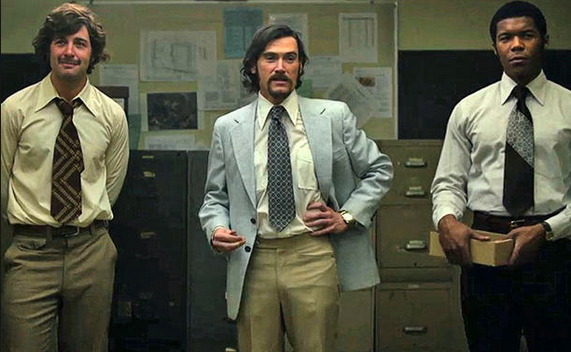
Zimbardo (center) with his graduate assistants.
Mike Penny (James Wolk) - left
Paul Vogel (Gaius Charles) - right


The themes of the SPE rise beyond the story of a prominent professors' research. The themes venture to the dark corners of human experience that lurk within all of. A love of power, a hunger for control that most people hope they never seize. If this simulation says anything about humans, it is that we all have a capacity to abuse power (especially when given the appropriate uniform), even when we clearly have not worked towards it or deserve it in any way.


"Prisoners" and "guards" in the simulation.


With all the buzz about power abuse within our current police force and prison systems, this movie was released at just the right time. It puts perspective on how these environments may actually be conducted. The SPE is just a simulation. All of the subjects enter at a level playing field. The guards and the prisoners are all averagely healthy and sane Stanford students, yet chaos still erupts. Imagine, within the justice system of our government, the events that could be produced out of people who have already been labeled as "criminals" or "enforcers." This gap of power is even wider and the implications that Zimbardo's research provides does not shine a positive light on the possible outcomes.


I am not in any position to propose a call to action or even provide a response to all the seeming corruptions that have taken place in our justice system in the news lately. But as someone who has stayed very neutral on these issues, the SPE has really sparked my interest on this matter.


As a reader, you may be thinking, "it was a cinematic work of art and was dramatized." Zimbardo himself has made comments about that sort of criticism to The Stanford Daily and I encourage you to read about it here.


Would you rather be a guard or a prisoner?


This film is not light. It will have your heart pounding from the opening scene, all the way to the final interviews. It begs the question, "What would you do?" It appears that humans have a hidden character within them that is revealed when repercussions are apparently eliminated and power is limitless. With discontent in our veins, and regret in our hearts, hopefully you can go back to being comfortable knowing that the Stanford County Prison is now closed.


Post script: There are so many scenes that agonize the viewer. They feel like a lifetime long. As Zimbardo watches the simulation progress, he becomes a part of the whole scenario himself. Further, the viewer watches Zimbardo conduct the whole experiment. You are constantly answering, "Well, this is exactly what I would do!" in your head. The voyeurism is magnified. Never have I been as engaged in a film as I have this one. 


My emotions turned physical. Even as I sit at home writing this, four hours after the film has ended, I still feel jittery. That painful sensation you get in your stomach after you've gone hungry for too long persists. The fragility you feel in your limbs when you are opening doors, or bumping your knee on the corner of the bed, it sends me to a chair whimpering. A few paragraphs ago, I accidentally bumped a mug of green tea off my nightstand onto the floor causing the ceramic handle to crack off. This nearly sent me into tears. I was worried my downstairs way be disrupted and I was ashamed to tell my girlfriend that I had broken her hand-me-down, shoddy appearing mug. Every train whistle has me jerking my head towards the window and my stomach twisting with anxiety. These were the sorts of sensations the film brought about. 

Monday, July 20, 2015

DCR Pollock - Debut Review

With the release of their first full length album, DCR Pollock has defined so many things about themselves that many artists struggle with right from the gate. The sound is an echo of Ray LaMontagne with some modern inserts. An accessible genre that is difficult to classify (not that it even needs to be classified).

DCR Pollock had projections of old movie clips displayed on set.


Granted, this isn’t David’s first go at artistry. He’s had many different recording projects and endlessly writes tunes and poetry. He even went through a drawing phase, which I wish he would bring back.This album has been a ‘grower’ for me. I listened to bits before it was fully released and didn’t feel the hook. That may be my own fault, it’s certainly no gym-routine album. After it was released, it became my post-move soundtrack. All of my belongings had been consolidated into a bunch of boxes in the corner of a tiny, old apartment bedroom. In an already stressful and overwhelming situation, sitting and listening to David weep about the church didn’t quite motivate me to unpack my new life in my new home-away-from-home-away-from-home. I couldn’t give it much attention until I found myself more stable in my own life. Giving the sense of environment I was in, there’s something I can say for certain, and that’s that DCR Pollock makes me feel things. Things I didn’t know I still had built up inside me, things I wasn’t prepared for and didn’t want to feel at the time. It’s a combination of the familiar pop tones that are used for his beats, glossed over with a gritty filter that makes me believe I’m listening to a dusty record through a punctured speaker cone. Approaching the end of the album, Sad Francisco comes in to cheer up the day. It provides a brightness reminiscent of BØRNS. We can probably attribute that to the influence of the bass in this song. Thanks Jon!With help from David’s brother, Jon, with production of the entire album and playing the bass, and good friend Dan Bailey, best known for his work with Father John Misty, it’s assured that this album is very well constructed and certainly above par for a debut album from a young artist like David.

David and his voice.


David’s voice has evolved immensely since I first heard him sing. Initially, I thought, “Wow, this kid sounds like Aaron Weiss from mewithoutYou.” I loved that sound, whereas David did not. He wanted to be more soft and melodic, which he has certainly achieved. I think that in the future though, his voice could be more cut-through and focused. I just want to be serenaded by him.

DCR Pollock in the chapel.

Hosting his debut performance in a chapel in front of many of his closest friends (and some strangers), I imagine David was humbled to present this promising platform for his artist career. Be sure to listen to the debut album by DCR Pollock on Apple Music, iTunes, and Spotify. For lyrics and contact information, visit their website.
Be on the lookout for an email interview that I am conducting with David.

Photo credits go to Jia Qi Juszczak. Check out their photos on Instagram.

Wednesday, June 10, 2015

NEW SINGLE "West Virginia" by The Front Bottoms

It's raining, 
it's pouring,
The Front Bottoms are scoring.

Long-distance relationships are challenging, rewarding, but nearly never successful. They are enjoyable while you are involved, but once they end, you realize it was just not quite worth it; it was not all it could have been. 

This is the sort of feeling that crosses me when I hear Brian ask, "Is it raining where you are?" The disappointment that strikes him when the response he receives is "no" must be crushing. This exact feeling (unfortunately) has surged through me. You are then put in a position that leaves you thinking, "Well, now what?"

"But ain't that the truth, man?
Those are just facts
The farther you go from where you start
The harder it is to get back"

Prolonging: As time goes on through a relationship of this sort, it gets strenuous and draining, physically and emotionally. Late-night phone calls and curiosity of the other involved keep you up at night. Inevitably, this chapter in life will end (most likely with a phone call break up and a sudden wave of time not spent on Skype) and getting back to life as it was is no easy task. 

The angst has been building up, and it pours out; the break-up is like the collapse of a dam and it will flood you with emotions of confusion, regret, and emptiness. Feeling directionless after this sort of break up is much stronger than in a standard relationship. 

"Right now I'm just a volcano
On the brink of an eruption
Right now I'm just a psycho
Hell-bent on self destruction"

This part of the song takes a feel of some early 2000s punk: the sound of what Warped Tour used to be. For this new track, the acoustic guitar no longer takes the pedestal. Instead, we hear a highly compressed and distorted lead, though Brian is still holding strong onto his Luna acoustic guitar. 

"Love of my life
Gone for good
Love of my life
Gone for good"

Despite the chipper, glittery guitar solo after this chorus, the song still sounds like a vast empty-hearted tune. In the music video, considering the number of people at the house show, all the emotions seem very contrasted. The lyrics describe a break up process (a very special kind of break up), the video appears fun and crowded, nearly claustrophobic due to the fisheye lens, and the music sounds upbeat and abrasive, yet approachable. 

The musicianship of The Front Bottoms has come a long way. They have not appeared to market themselves as just a two piece band anymore, as they once did. They have filled out their sound. Matt is a much more structured drummer. Still using one of the simplest set-ups (bass, snare, hats, floor tom, ride) he has a more robust sound. He drives this song a lot more, adding syncopation with the vocals. The lead guitar and the bass play a more significant role in the overall sound and I hope that is the case for future tracks. 

I'm still left wondering why this song is called "West Virginia." I am hoping there will be a good story in an interview with the band in the near future as there always seems to be. 

Ever wonder about the story behind their song Rhode Island? Find out here, skip to 3:30. 

Watch the new music video here and sign up for The Front Bottoms Motorcycle Club here, where you mob around the beaches of New Jersey in your new TFB leather jackets, helping old ladies cross the street together.


Saturday, May 23, 2015

Have A Good Season - Last Picture Day EP review

When the studies gets tough, the tough get studyin'. Studying to Have A Good Season, that is.

This EP has been the soundtrack of my daily library visits as of late. The pacing is perfect. It doesn't get too fast, and it doesn't put me to sleep. The vocals aren't overpowering or abrasive. They're adding into the tracks as another instrument, like that layer of frosting in the middle of the birthday cake. Not being the spotlight of the EP should not be equated with a devaluation of the vocals. In the song Squid, the lyrics are modeled as a dialogue. It addresses very introspective questions that aren't directly talked about enough in daily life:

"'Please respect the dead.'
 'How does one respect the dead?'"

Then the chorus repeats this line over some syncopated drum and guitar patterns that are simple yet still interesting to listen to:

"If my mind has a mind, am I ever truly alone?"


This is the sort of meta-awareness that has always astounded me. I'm glad someone could work this idea into song lyrics.

The song Dinosaur Bones gives us a good taste of what the vocalist really has to offer. By singing along to a slower ballad, we're given a taste of how Have A Good Season can bring down the energy and still pack a punch to their listener. We loom over loss as the vocals trail off with the decrescendo-ing guitar and washy cymbals: 

"All I have left, was all I had left. Now all I have left."

The whole mixing of this EP has a unique sound. The guitar and bass are clean, but contain enough grit when sustained to make you want to gently headbang (the kind of headbang where your hands stay in your pockets and you lock your knees on 2 and 4). The Japanese Bonus Track gains emotional strength about one-third through (3:30) where the guitar leads begin to slide, pull-off, and hammer-on. It gives a feeling of tension between the tightness of the drums and the looseness of the guitar lead. 

We get a similar taste of this style of guitar lead in the premier track When the Brain Tells You to Breathe (a brilliantly titled song) right after the intro of the song as it locks right into a similar sliding guitar lead. The guitarist isn't the only one to take a lead role. In the end of Oh, Carl, the drummer powers us to the end, taking the lead and locking in with the guitar. (That bell hit at 4:04 sends shivers down my spine). It just makes me want to know you, Carl. 

From listening to some of these lyrics, the amount of stories packed into this EP is beyond me, I'm sure. Their rock is tight, and their roll is smooth. 

Next time you step into the library to think, give the Last Picture Day EP a listen.


Related artists: Heart Attack Man, Citizen, Secret Stuff

Saturday, May 9, 2015

New Single by the young D.C.R. Pollock -- Try Harder

Unexpected Love; Just What I Needed

In his new single, singer/ songwriter/ artist/ fashionista David Pollock writes about his struggles as a lover (which I happen to know he's actually very good at). Having recently recovered from his gloomy Letters to friends (of which I did not receive one), he seems to feel recovered from the loss, transformation, and relocation of friends he once had. Searching for love to fill that void, Pollock writes:

"I'm trying hard to make you love me, but it's harder than it seems."

Being single in high school must be rough, but I'm sure this suave young gentleman won't have any trouble finding love down the road. 

Pollock uses space in his music to create a dynamic from section to section, layering into the space as the song builds. Having written with Pollock before, I find that his idea of song structure has always been unique. There's not a typical intro-verse-chorus-verse-chorus-outro, but rather a construction of sounds that build from one section to the next. This can make a first listen not so easy, since the reprise tends to be subtle. This challenge is something that brings me back to listen over and over.

About halfway through the song, "Try Harder" turns into a party anthem [but more like a small party that you would have with five of your closest friends after you've found out that your long distance partner has cheated on you with your cousin]. The synth-like drone is abrupt but equally pleasing by filling in the gaps between the spacious bass line and simple drum pattern. I think Pollock must have found a MicroKorg laying around his garage (you'd be surprised what he finds "laying around"). 

This sound isn't what I would have expected from D.C.R. Pollock, but he's known to keep listeners on their toes when he finds new ways to experiment. 

Take a listen to the new single "Try Harder" on SoundCloud or Spotify. Keep an eye out for an upcoming album release! Stay updated with his new website.  

Tuesday, March 4, 2014

Butch Cassidy and the Sundance Kid

A tale of adventure, brotherhood, love, and loss; this western film is one that will be known as a classic for more than just it’s cast. With Paul Newman as Butch Cassidy and Robert Redford as Sundance, it’s easy to see the potential of the success of this production. Aside from that, the format of the editing is something that really sets it apart from most movies of the time in 1969.

Opening up with a silent short, displaying images of Butch Cassidy’s Hole in the Wall Gang from Wyoming, you can expect to see some train robbers, bank robbers, brotherly companionship, and gunfights. This non-diegetic element (the film within the film and the soundtrack) explains that this story is one loosely based off true, historical events. I say loosely because the movie is not categorized as a documentary of any sort, but rather it dramatized some true events.

There were also some interesting views on morality in this movie. Butch and Sundance were robbers in the developing western civilization of the United States, and while they didn’t intend to kill, they were still committing an “immoral” act, according to most; robbing. Their counter antagonists were constantly after them, pursuing an arrest. Since they were so slick and always got away, they were soon chased after with intent to be killed. (You see this in the last scenes of the film.)

The interesting contrast here is that, even though Butch and Sundance are the “bad guys” of the movie, the wrong-doers, they are the ones classified as the protagonists, the characters that we follow and relate with throughout the course of the movie. The officers in the States, and the officers in Bolivia are the good civilians, protecting their citizens from harm’s way, namely Butch and Sundance. These officers though, are the antagonists of the film, the ones who we want to see fail in their endeavors.

This is a theme that has become a staple to western films. The idea is a counterintuitive one that I find worthy of addressing; especially concerning a plot line so monumental to the genre. 

There are some more antagonists who were, more or less, true antagonists; “bad guys.” They were a group of cowboys who were hired to chase down Butch and Sundance when they attempted their usual robbery of the same Union Pacific Railroad train a second time. These antagonists were following behind in their own train, waiting for Butch and Sundance to strike again. When they finally get the opportunity to strike, they sure do and the chase is on. 

The unique thing about this chase: you never see the pursuers faces. They aren’t identifiable in this regard. It makes for a more mysterious looming sense that Butch and Sundance are lingering in a more unclear state than they were before.


New formatting techniques, rising Hollywood stars, and a contrast of traditional moral view points make for a movie that sets the bar for the soon-to-boom western film genre. Butch Cassidy and the Sundance Kid is a classic that takes you back in time to the civilizing west. 

Works Cited

Barsam, Richard Meran., and Dave Monahan. Looking at Movies: An Introduction to Film. New York: W.W. Norton &, 2010. Print.

Butch Cassidy and the Sundance Kid. Twentieth Century-Fox Films, 1969. DVD.


Thursday, February 13, 2014

Juno: the birth of a genre

Sixteen and pregnant; a classic drama portraying the irresponsibility of our youth. This is not the template story line you get from the movie Juno. Although the main character, Juno MacGuff (Ellen Page), is sixteen and pregnant, she does not handle the situation in a traditional fashion. Her wit and trivialization of the situation make this melodrama one that will make you want to console the awkward couple, Juno and Paulie Bleeker (Michael Cera), despite their being poor decision-making teens. 

The downplay of this seemingly dramatic situation is mainly attributed to the slang that is used throughout and the casual relationship Juno shares with everyone, using phrases such as "silencio" and "honest to blog," which is something her best friend exclaimed when she told her she was pregnant. These phrases, along with other cinematic elements, are fairly new to this generation of the film industry. For that reason, this film has set a new expectation for a genre that will proceed it.


Juno's best friend, Leah, on the phone in her bedroom

The structure of the story line is a unique rising action plot. Typically, a rising action story will start with an exposition and continue with events that lead to a climax. From there, a conclusion is brought to the plot. What's different about the plot in Juno is, while basically a rising action plot, it also derives writing styles of an episodic plot. This is because of the structure of the three acts which are presented as fall, winter, and spring.

The story is written as if each act contains it's own rising action plot within. Fall is a time when things seem to pass before us. It's also when Juno and Bleeker fool around, a climax being her discovering that she's pregnant. Winter is a time of distress and dismay. The climax here is when Juno leaves a note on the doorstep saying, "Vanessa, if you're still in, I'm still in." I also view this as the climax of the overall plot line. Spring is a time of growth and rebirth. In this act, Juno has the baby and her and Bleeker rediscover their love for one another.


Juno's note to Vanessa


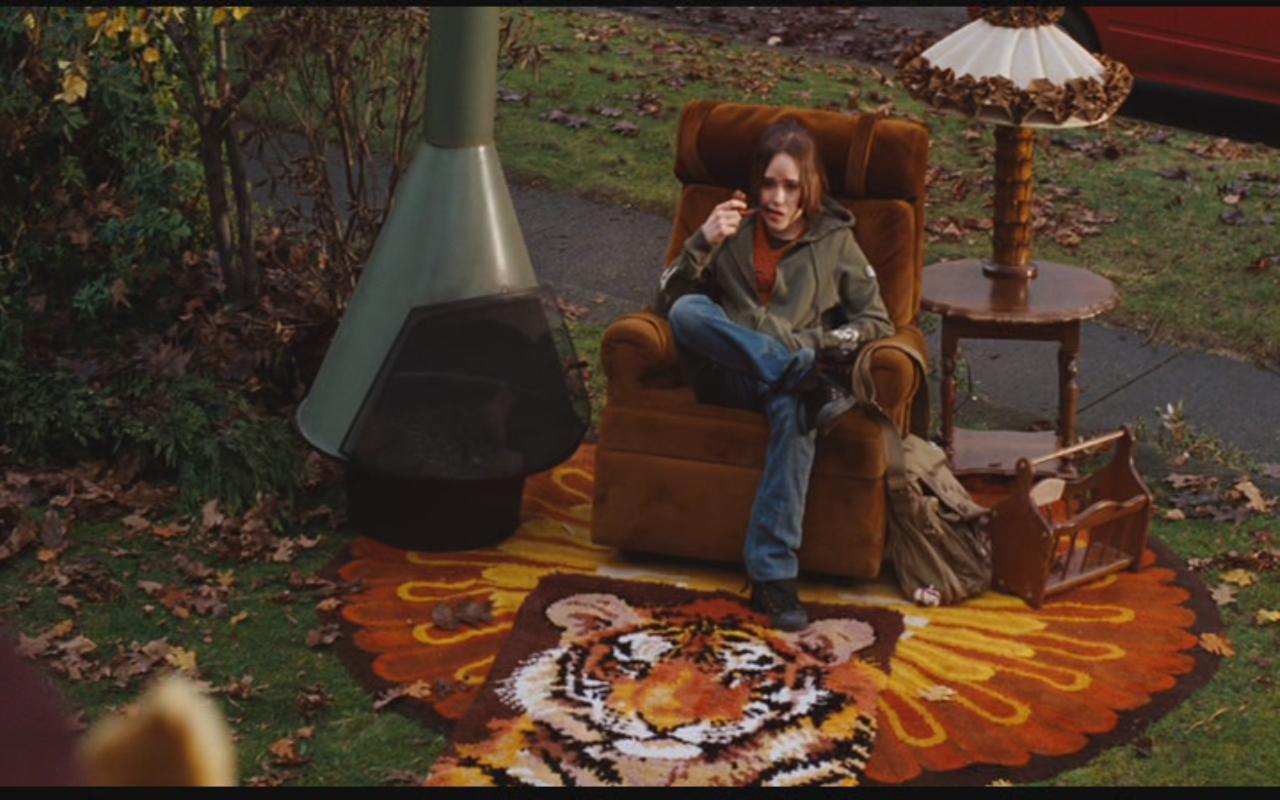
Other remarkable elements of the film are the set and color pallet designs. These elements are displayed in a manner that would not initially be perceived as professional film quality. While the dingy furniture quality in Juno's house does play a role in her family's appearance, it also attributes to the image of indie films. Everything looks as though it was purchased secondhand.


Juno with the family's living room set

Lastly, the soundtrack is an element that adds to the freshness of this production. The songs used in this film are all recorded by Ellen Page and Michael Cera, serenading one another with simple, yet endearing metaphors that would probably be inside jokes between their characters.


"You are always trying to keep it real.
I'm in love with how you feel.
I don't see what anyone could see
In anyone else
But you."  

The structure of the story line is interesting, something different from most rising action plots. With quirky humor, earthy color pallets, an appearance of low budget set design, and “unique" recording techniques used on the simple soundtrack recorded by some of the stars themselves, this movie was a monumental marking of the indie film genre. Putting these in perspective of longevity, I would not expect the movie to age well.


Works Cited

Barsam, Richard Meran., and Dave Monahan. Looking at Movies: An Introduction to Film. New York: W.W. Norton &, 2010. Print.

Juno. Dir. Jason Reitman. Prod. Lianne Halfon, John Malkovich, Russell Smith, and Mason Novick. By Diablo Cody. Perf. Ellen Page and Michael Cera. Fox Searchlight Pictures, 2007.

Sunday, February 9, 2014

A Positive Performance on AIDS

A Positive Performance on AIDS


Set in a non-traditional venue called the Firehouse Performing Arts Center in the Fairhaven Historical District, I saw a performance of Positive on Friday (2/7) night and was touched by the stories of our locals. This performance was written by the company of the production, under the guidance of Pam Kuntz, a director of the performance. Don’t arrive expecting to see a traditional play, because that’s not what the producers, Kuntz and Company, have planned for you.


Throughout the performance, secrets concerning HIV and AIDS conditions of the local actors and dancers are unraveled in a beautifully artistic way. Nearly everything that is portrayed on the stage is derived from personal experiences of the actors. Though, none of it is directly attributed to any specific individual by name. This makes for a heartfelt and sympathetic tone throughout the night.

The performance is structured not using one fluid story line, but rather a pattern of themes portrayed through contemporary dances set to appropriate lighting. These two things made the play most unique: the structure and the lighting. The creator, Pam Kuntz, along with many of the cast members, wrote out this performance including their personal struggles. The performance was patterned as follows: a short bit of dialogue between two characters, a dance scene displaying the partners, and then a reprise showing all of the patients waiting in a hospital-like scene to hear news about their conditions. This reprise was most powerful to me because of the lighting, which was designed by Mark Kuntz.

The lack of a proper set design and minimal props meant that the lighting and sound were crucial, and it was spot on. This is what gave you cues as to where the characters were or what they were doing. During the reprise in the hospital, the lighting shone onto the characters from below. It was interrogative, harsh, and stale, pale lighting. It cast a sickly glow onto the AIDS patients, pulling a strong sense of sympathy from the audience. 


The Firehouse allows for an up-close interaction with the performers


There was also a painting projected by light that was painted by Keith Haring which was utilized very well. During a scene change, the actors would line up on the floor preparing for the dance scene and to brighten them up, this painting, paired with a cold and eerie whooshing sound, would appear. It wouldn’t be projected all at once. It showed up from stage front to stage rear in synchronization with the whooshing sound. It was a minor detail I found to be a real display of skill by the lighting designer in partnership with the sound director, Angela Kiser.

Kiser picked out great sound samples for all of the scenes. The sound effects all magnified the drama of the action. The songs were very reminiscent of an era. There were clips from artists such as The Andrews Sisters and the Bee Gees, taking the audience from decade to decade with the same issues in the characters lives still present, no matter the time. The actors dancing fit right in to all of the song’s time in history. This was really powerful in changing the setting. The only downfall were some of the lengthy dance scenes that seemed to drag on a bit longer than necessary. The contemporary dancing was stunning to watch, but one only needs to see so much of a square dance scene before it has become too much. 


Firehouse Performing Arts Center


The writing, lighting, sound, and dancing were all so strong in this unique performance. Not to mention how quaint and warm the venue is with it’s fireplace and wooden flooring. It’s not your typical play. Go in with an open mind, excited to see something fresh and you won’t be disappointed. The performance runs from February 6-9 and 13-16 at 7:30pm at the Firehouse Performing Arts Center in the Fairhaven Historical District. Tickets can be purchased for $15, $12 for students and seniors, at Village Books, only a few blocks away. 

Thursday, January 23, 2014

The Matrix

The Matrix


"Fate, as it seems, is not without a sense of irony." This holds true to the contrast between scenes in The Matrix as well. The Matrix is the location of a space where a computer program generates the world as we perceive it. Here, we see a setting that we are all familiar with. It is a safer place that has clean and white lighting. The space is not confined, rather it feels open, like a normal, modern society in the late 1990s. This is not what you'd expect if you had heard about The Matrix before. You might imagine a much more technology driven living environment on the surface. In a way, this is true, but the technology lies beneath the surface. It truly exists in the "real world" with which we are unfamiliar with.

Set about two hundred years ahead of time, the real world is a messy and disorganized conglomerate of monitors, computers, tunnels, and mysterious rusty pipes. The Nebakanezer, drifting through the real world, is the location of the operators of the The Matrix. The surfaces are grimy and the lighting is low; an almost sickly green color.  Outside of this non-traditional office space is a run down society. The skies are dark, the buildings are bleak, and the streets are trashy. This demonstrates a future that is doomed, which is what many people had believed would happen at the turn of the century.


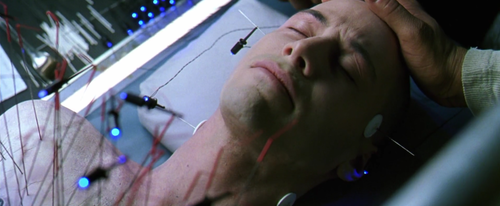
Inside the Nebakanezer, where the Matrix operators dwell

You would expect to be familiar with the real world, but it's not what holds true. This setting is very different from what is portrayed in The Matrix software. As it turns out in the movie, The Matrix is a place in which you are comfortable, it is a place of familiarity and resonance of your own life as it appears to be. Though, it is also a place of blindness and ignorance; a lack of truth. On the other hand, there is the real world. A place that The Matrix spawns from. It is a place of reality and simplicity, some may even say deviance. At the beginning of the movie, Neo was proposed with a choice between revealing the truth or to continue living life as he always had. He chose to take the red pill that Morpheus had offered him and to discover the truth of life as it really is. Once Neo becomes aware of the use of The Matrix, he wants to go back to living life how he used to; unaware of the operations that went on behind the scenes. I believe that Neo's denial of The Matrix is a theme that suggests that knowing what reality truly is, while entertaining to address, is something that can be too overwhelming and too unbelievable to accept and live with.


Neo: Why do my eyes hurt?
Morpheus: You've never used them before.

This demonstrates the irony between what reality is and what we perceive reality to be. You want to be comfortable in your life, learn about it and thrive. Though the more that Neo learned about what was truly going on, the more uncomfortable he became, and the irony between the truth and the determination to obtain that truth grows and grows.

Works Cited

"Matrix." Matrix. N.p., n.d. Web. 30 Jan. 2014. <http://movieimage.tripod.com/matrix/>.

The Matrix. Prod. Andy Wachowski and Larry Wachowski. Dir. Andy Wachowski and Larry Wachowski. By Andy Wachowski and Larry Wachowski. Warner Bros. Pictures, 1999. DVD.

"Rooster Teeth · Inside the Nebuchadnezzar (This Is the Right Spelling)." Rooster Teeth. N.p., n.d. Web. 30 Jan. 2014. <http://roosterteeth.com/members/images/image.php?id=1865545>.